This visual introduction to Rwanda’s Volcanoes National Park showcases a protected area of roughly 125 square kilometers, rising from 2,600 meters to the 4,507-meter summit of Mount Karisimbi. The park embraces a mosaic of mountain forest and Afro-alpine habitats spread across five volcanoes that straddle the borders with the Democratic Republic of Congo and Uganda.
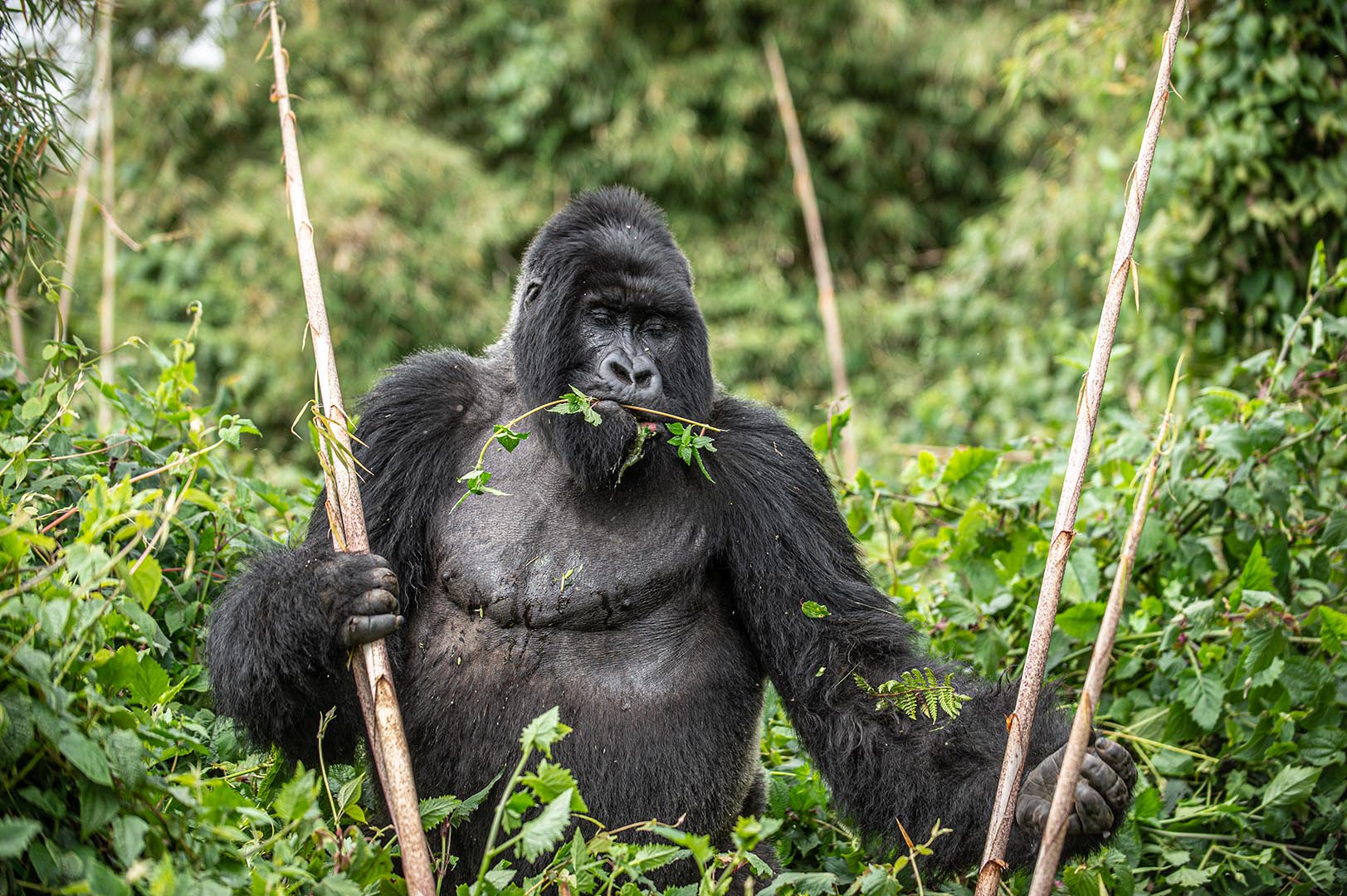
The park is especially famed as one of only two strongholds for the critically endangered mountain gorilla (Gorilla beringei beringei), the other being Uganda’s Bwindi Impenetrable Forest. Current estimates place the Volcanoes population at just over 1,050 individuals.
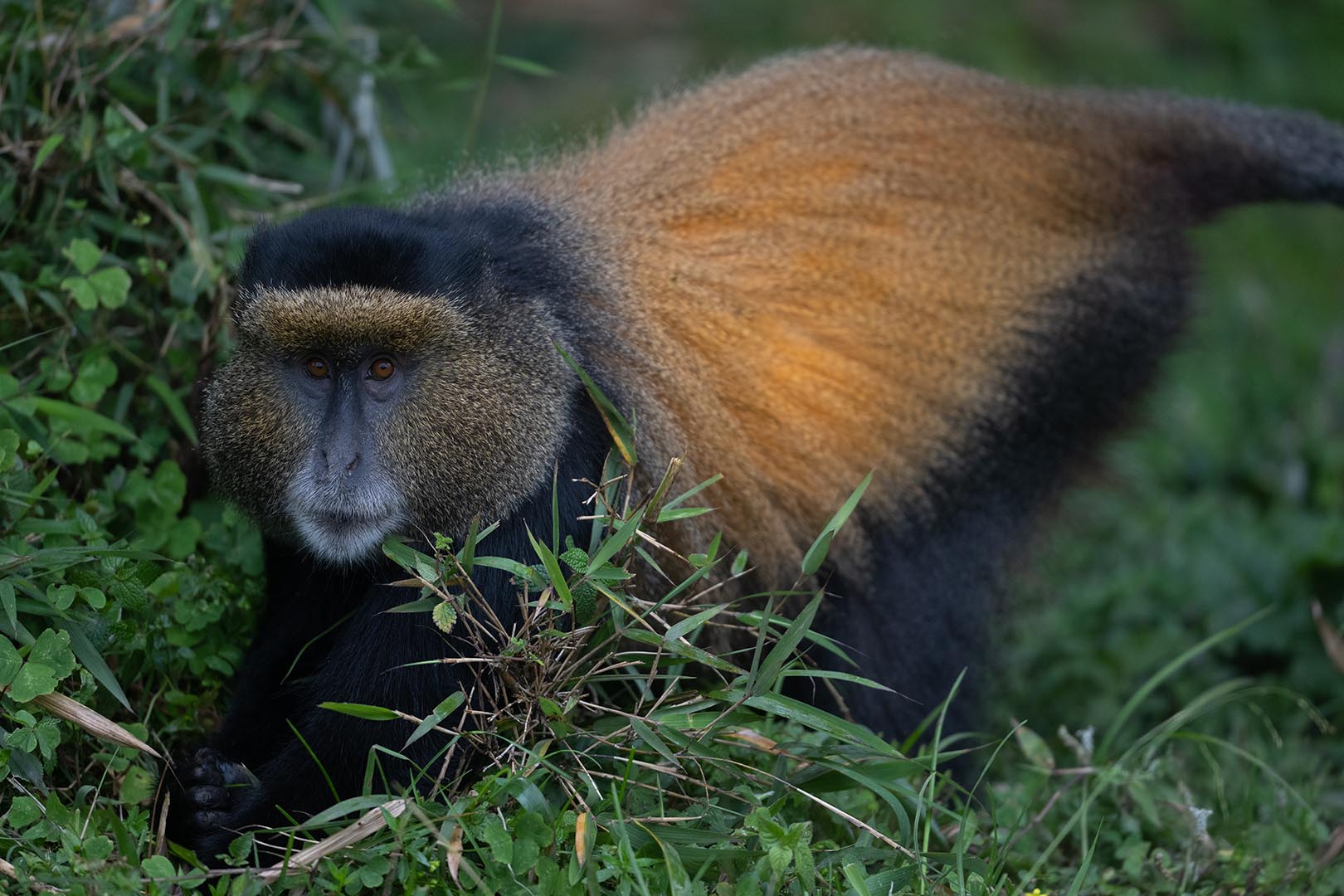
Within its forests live a handful of species with extremely limited ranges on the African continent, such as the Scarlet-tufted Sunbird, Grauer’s (Abyssinian) Owl, and the endemic Golden Monkey.
Encircled by more than a dozen lodges and camps, Volcanoes National Park remains Rwanda’s flagship tourist destination, prized for its spectacular volcanic landscapes and unforgettable encounters with mountain gorillas.
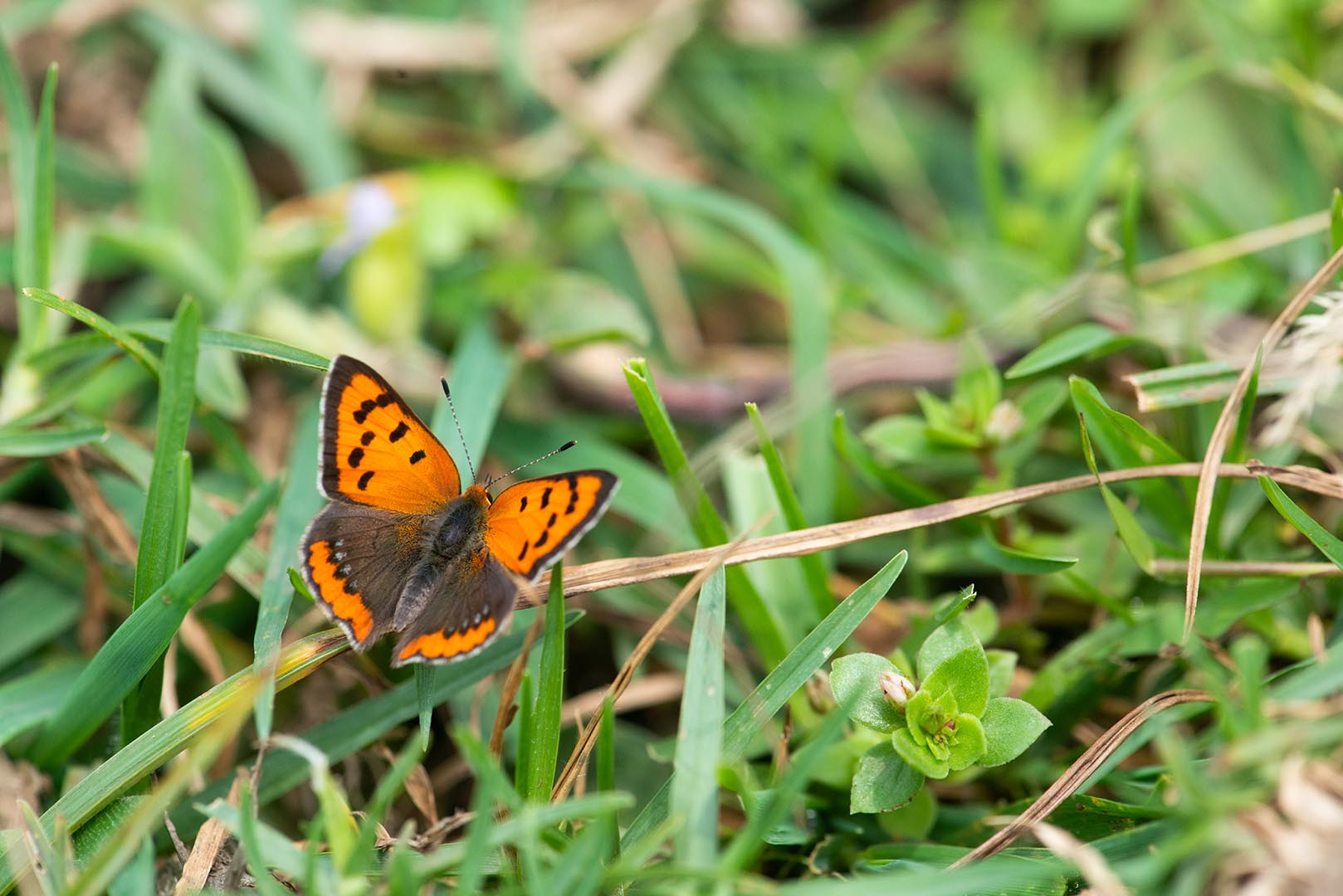
A freshly hatched Small Copper (Lycaena phlaeas)
on the grasslands of the park.
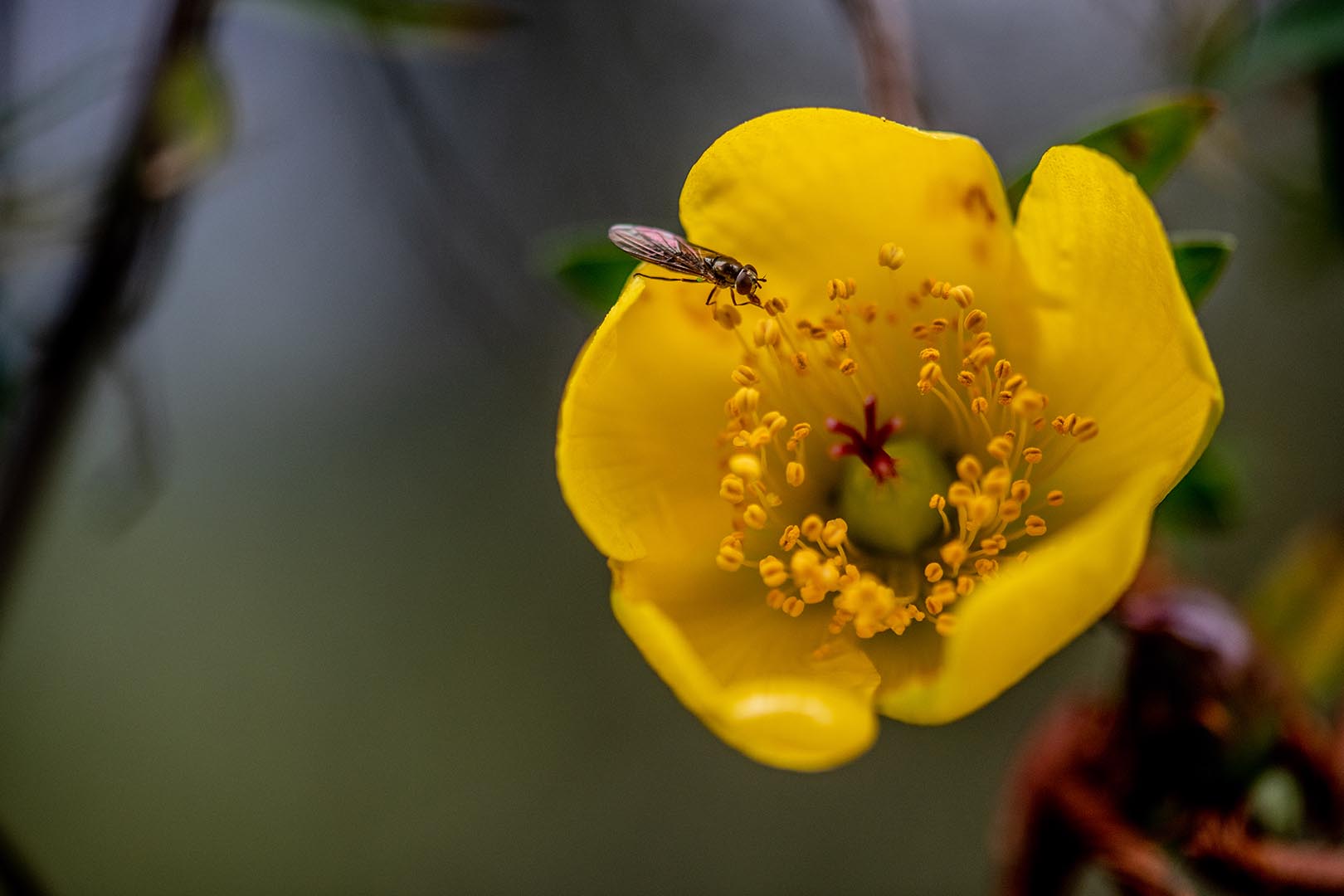
A flower of Hypericum revolutum, one of the
dominant tree species of the volcanoes forest.
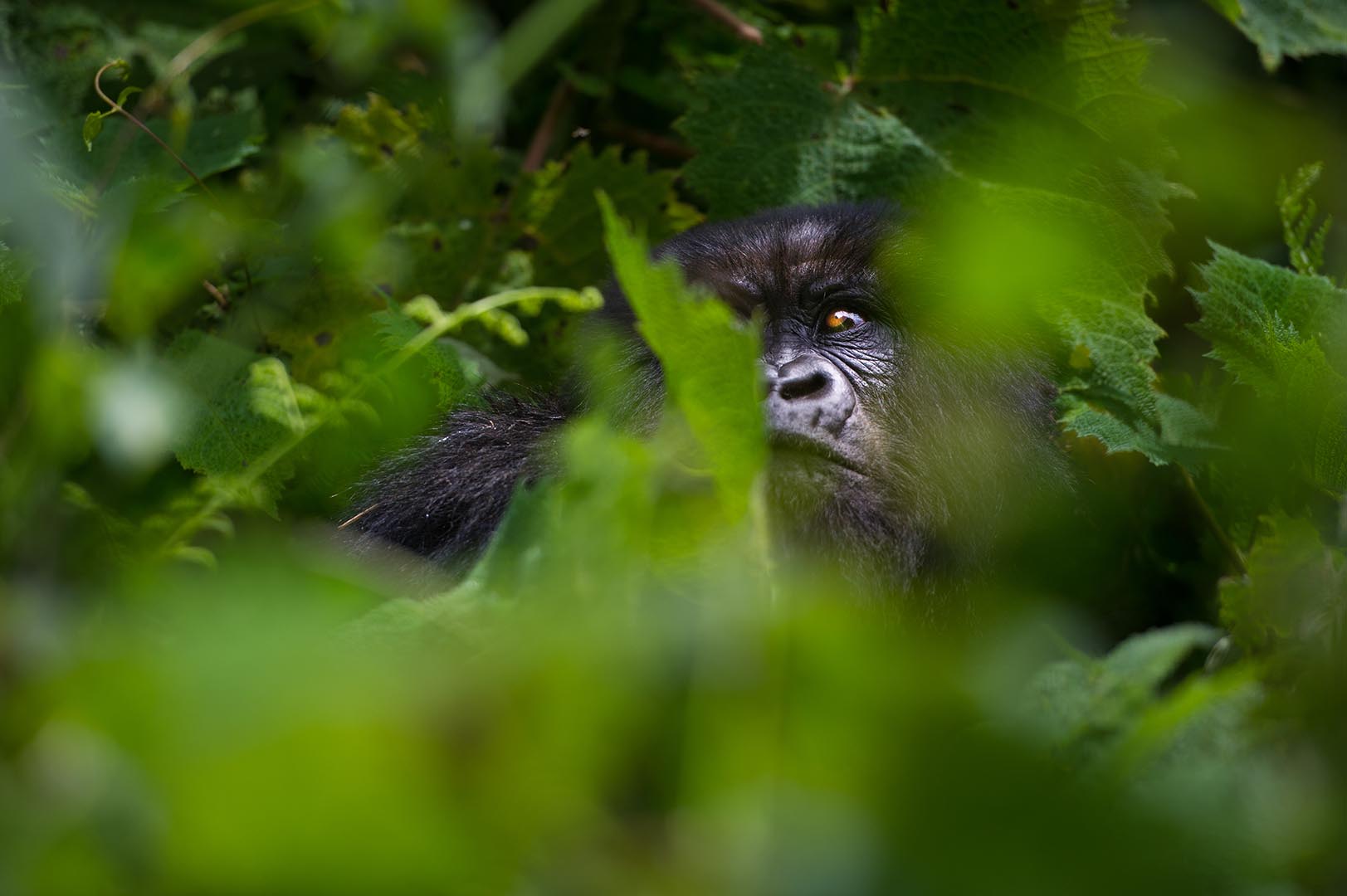
A female Mountain Gorilla’s gaze.
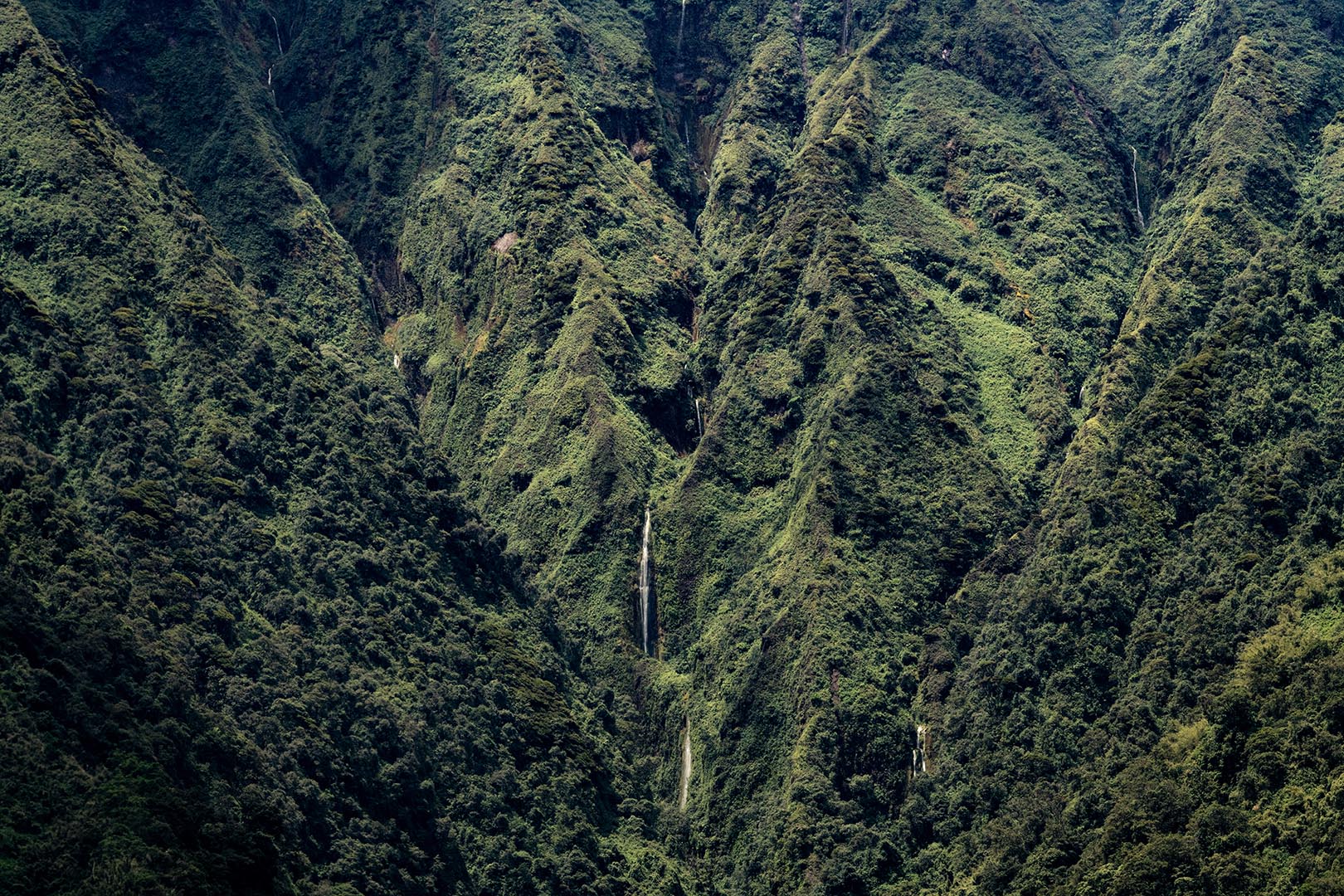
The deep eroded trenches of Sabyinyo and
their multitude of small waterfalls.
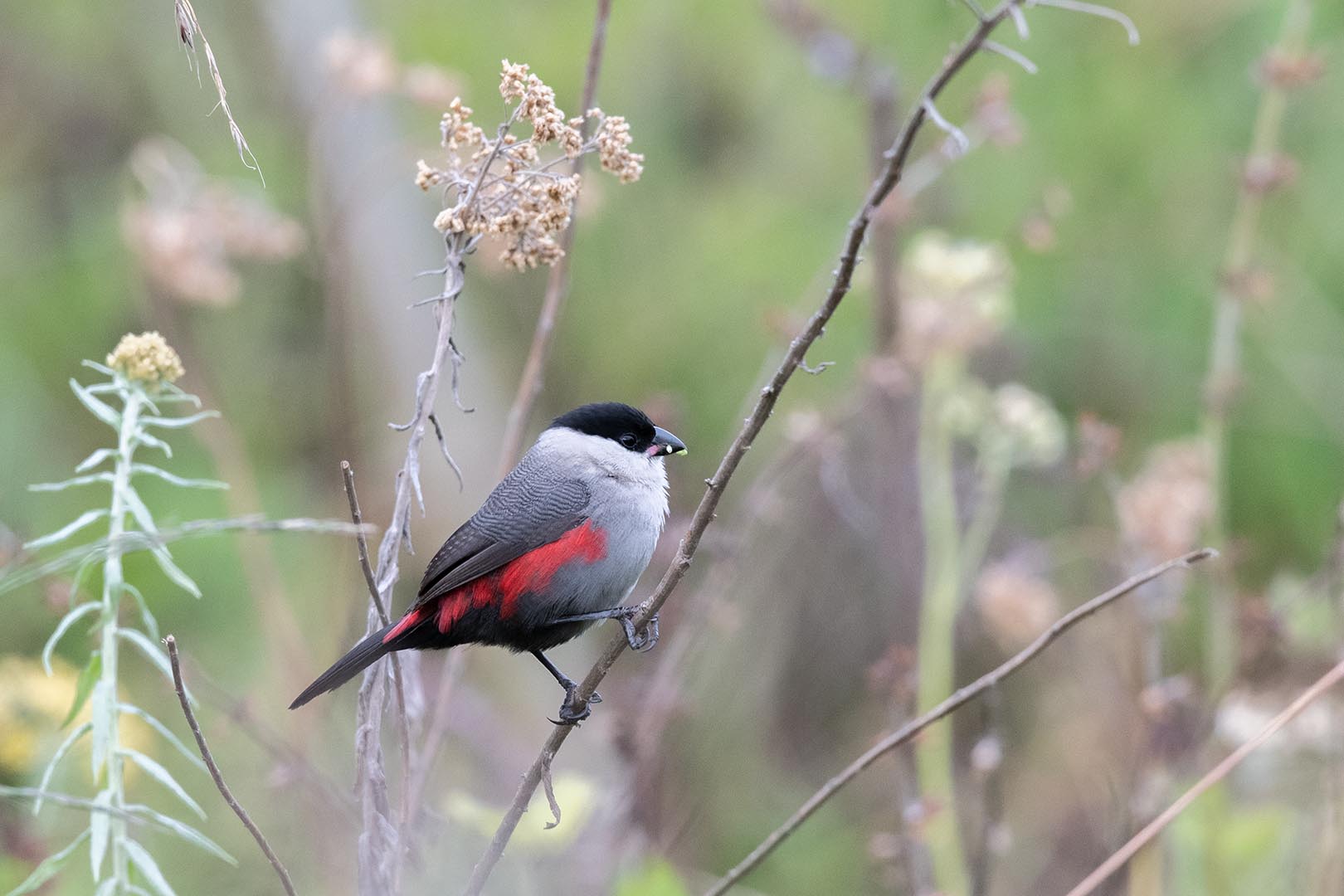
Kandt’s Waxbill |Estrilda kanti
Common in high altitude grasslands and thickets.
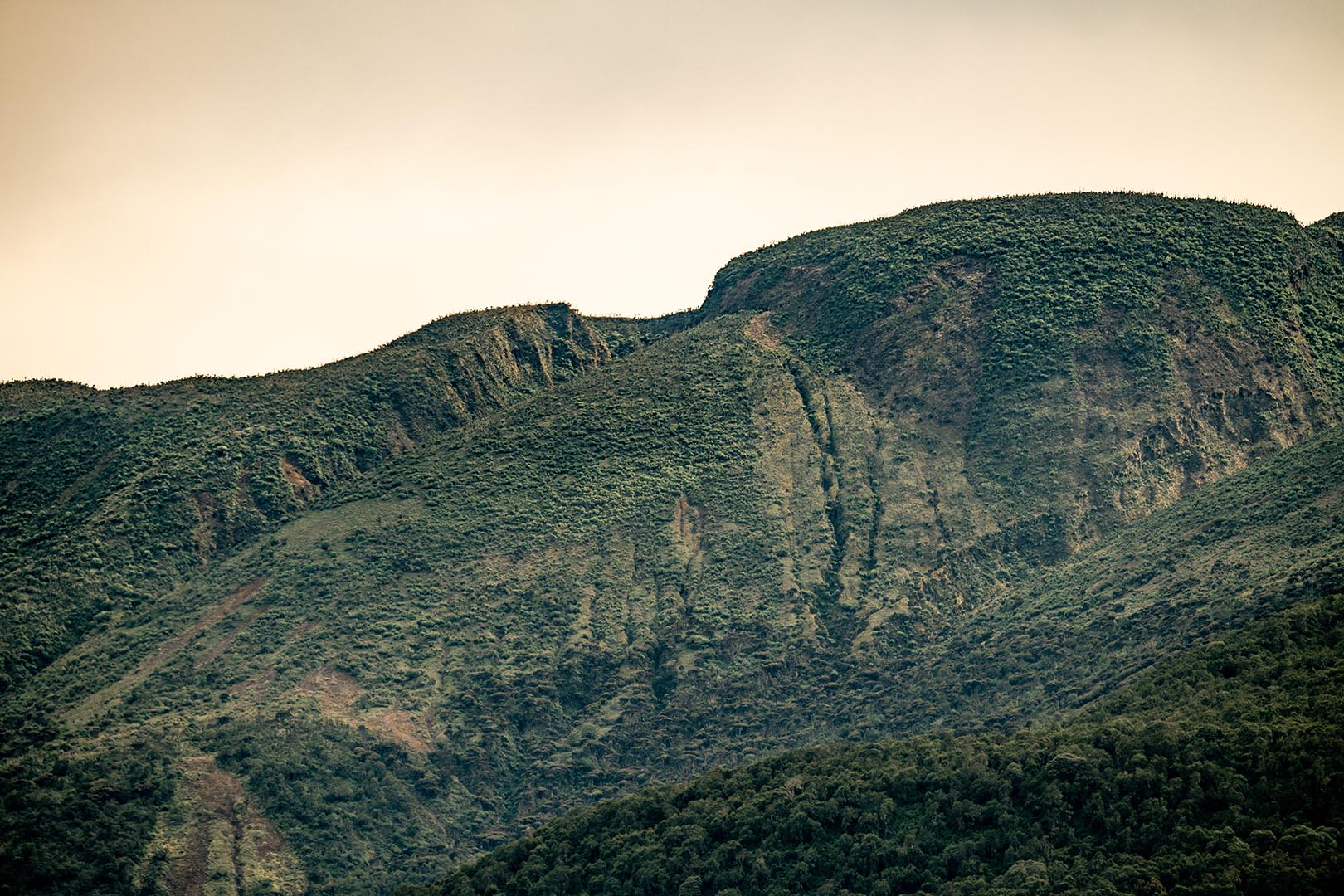
The foot of Karisimbi, is called Kimbagira, and culminates
at around 4,000 m and is difficult to access.
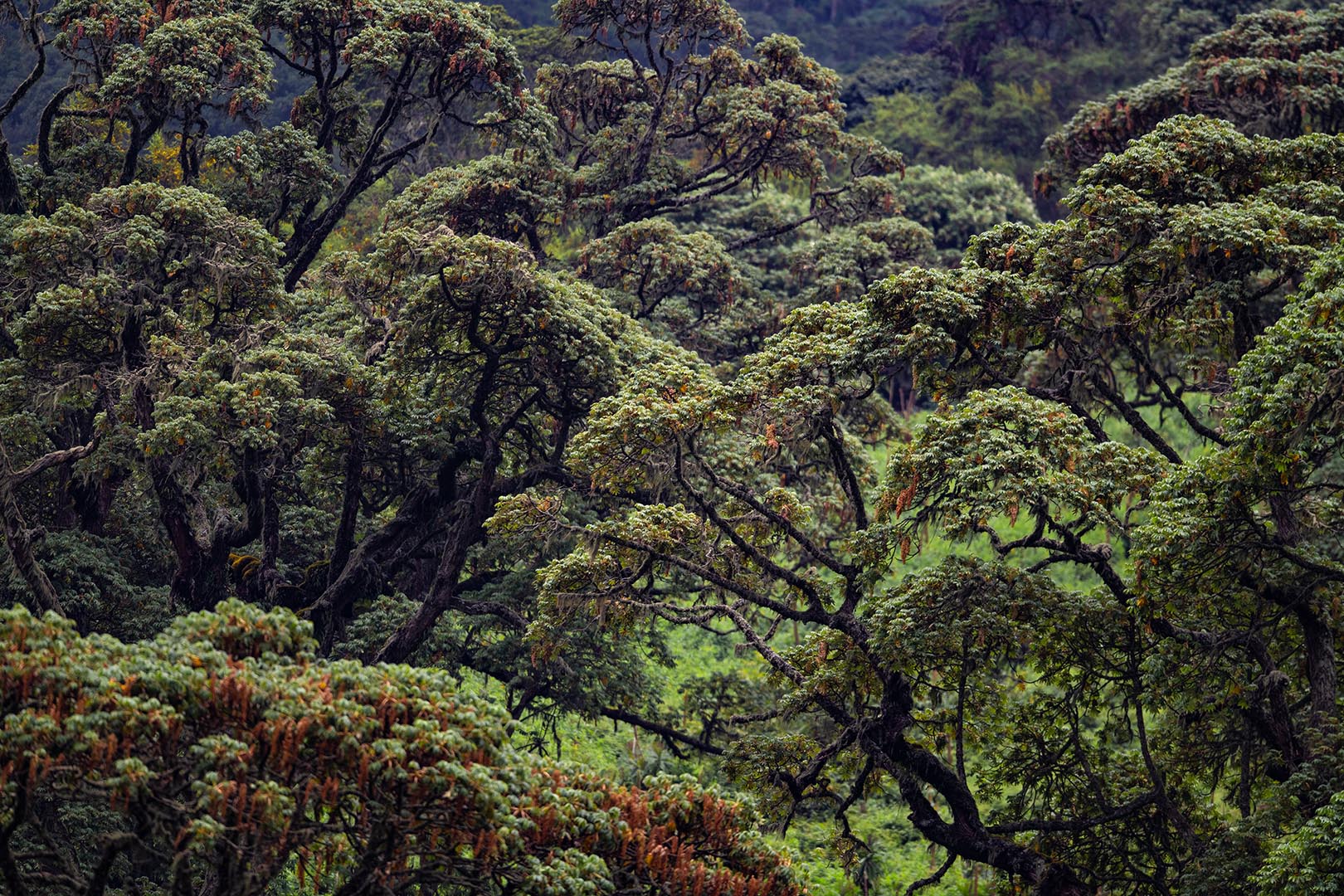
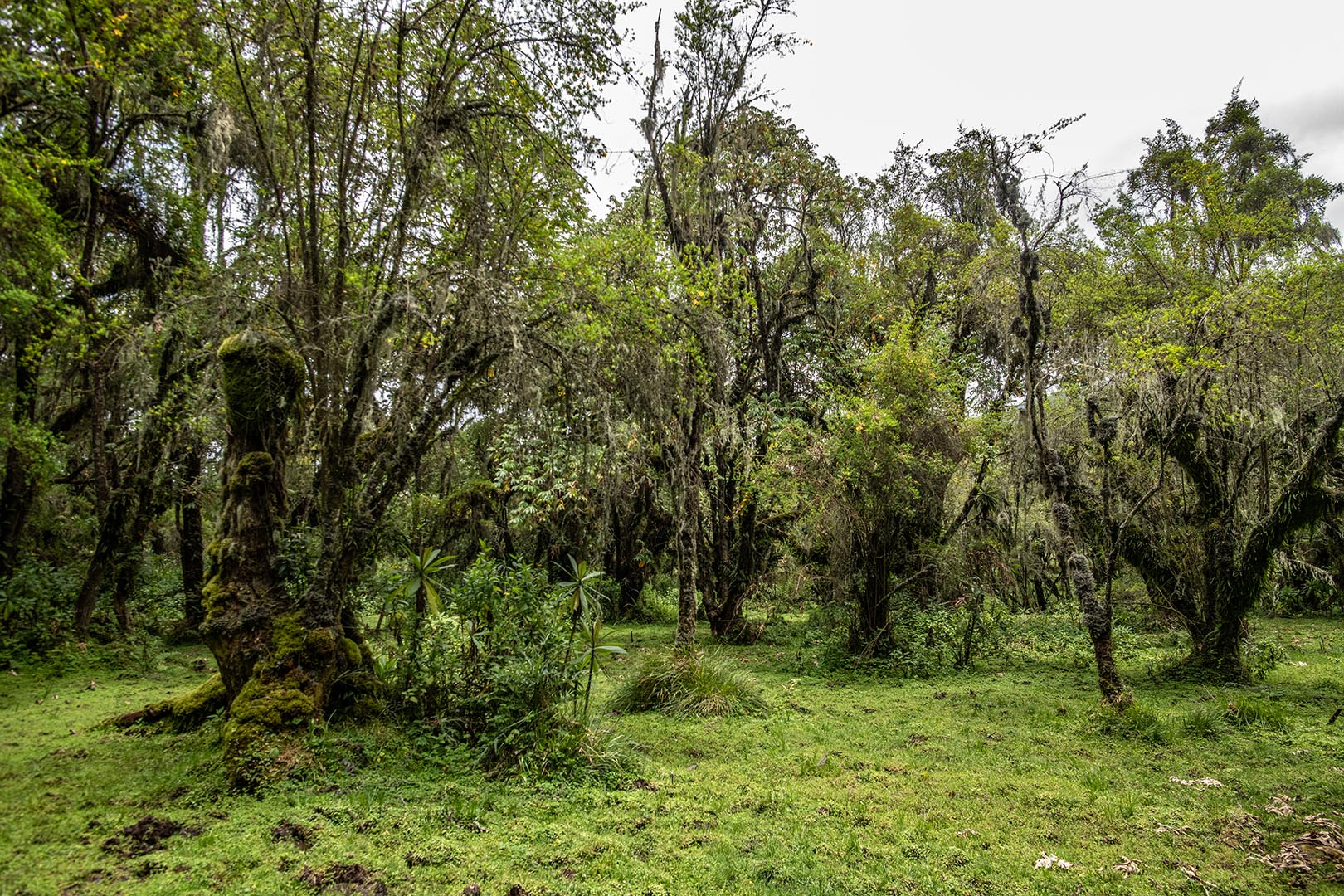
Hagenia forest at the foot of Bisoke Volcano
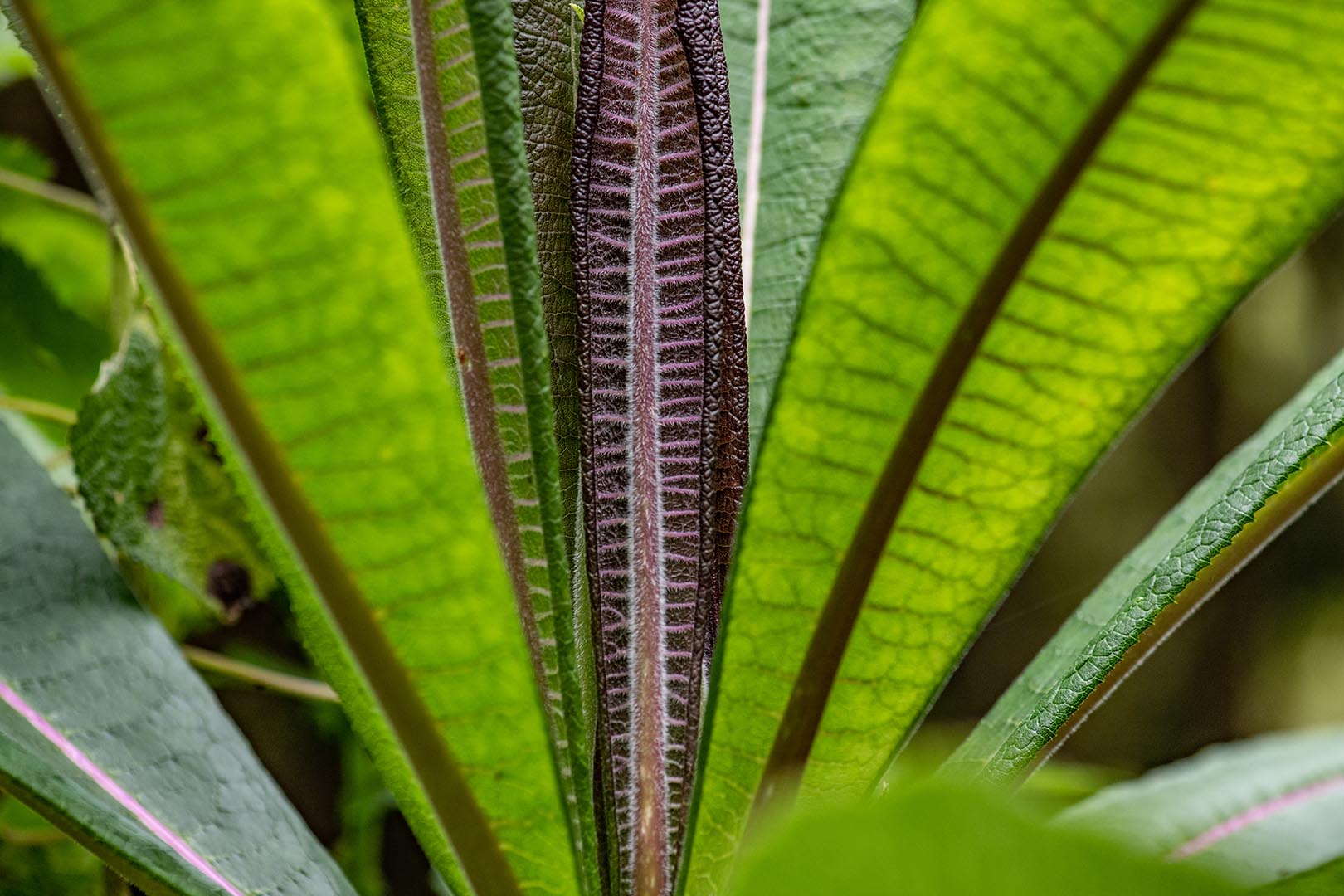
A detail of large Lobelia leaves.
A large Hagenia on the way up to Bisoke Volcano.
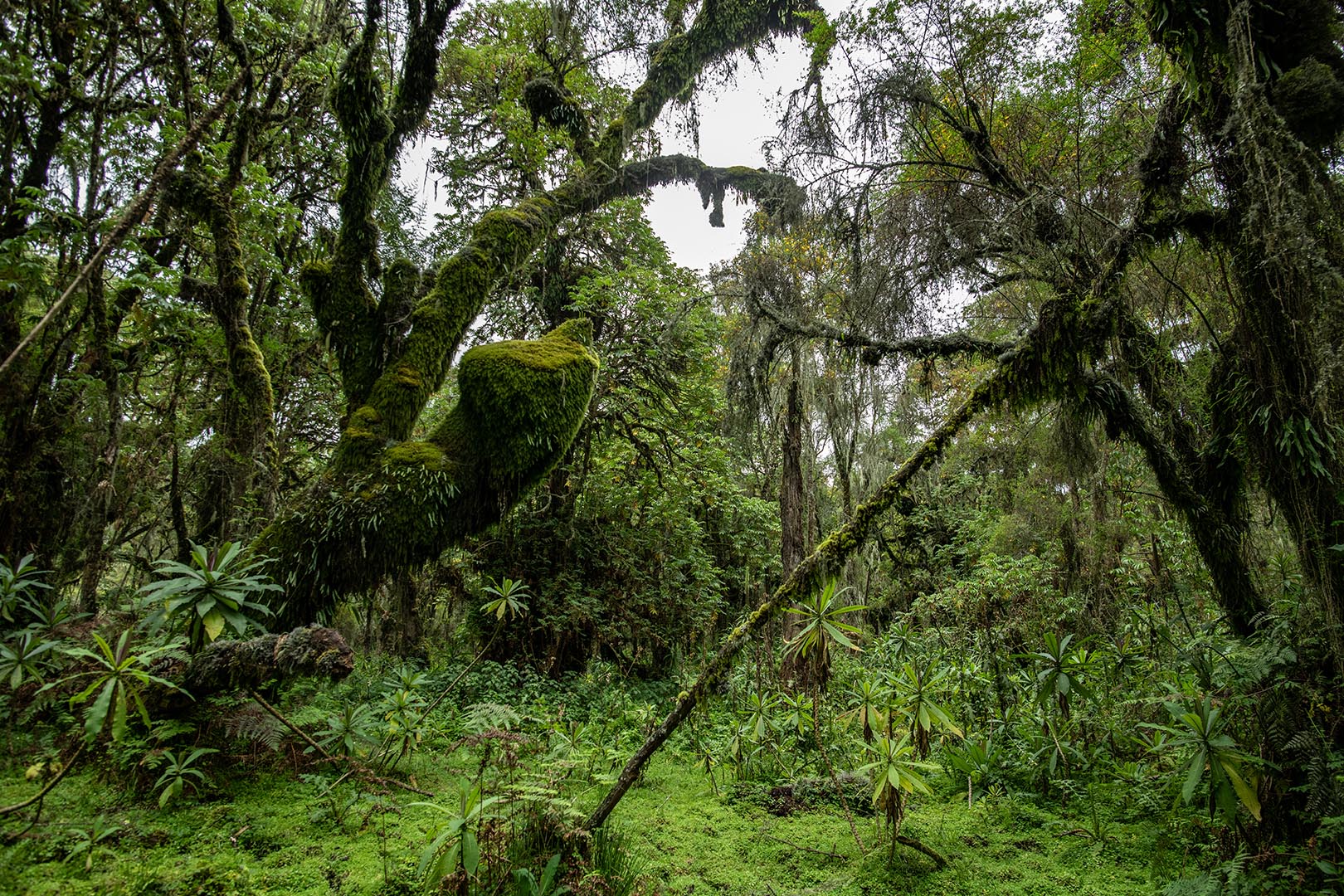
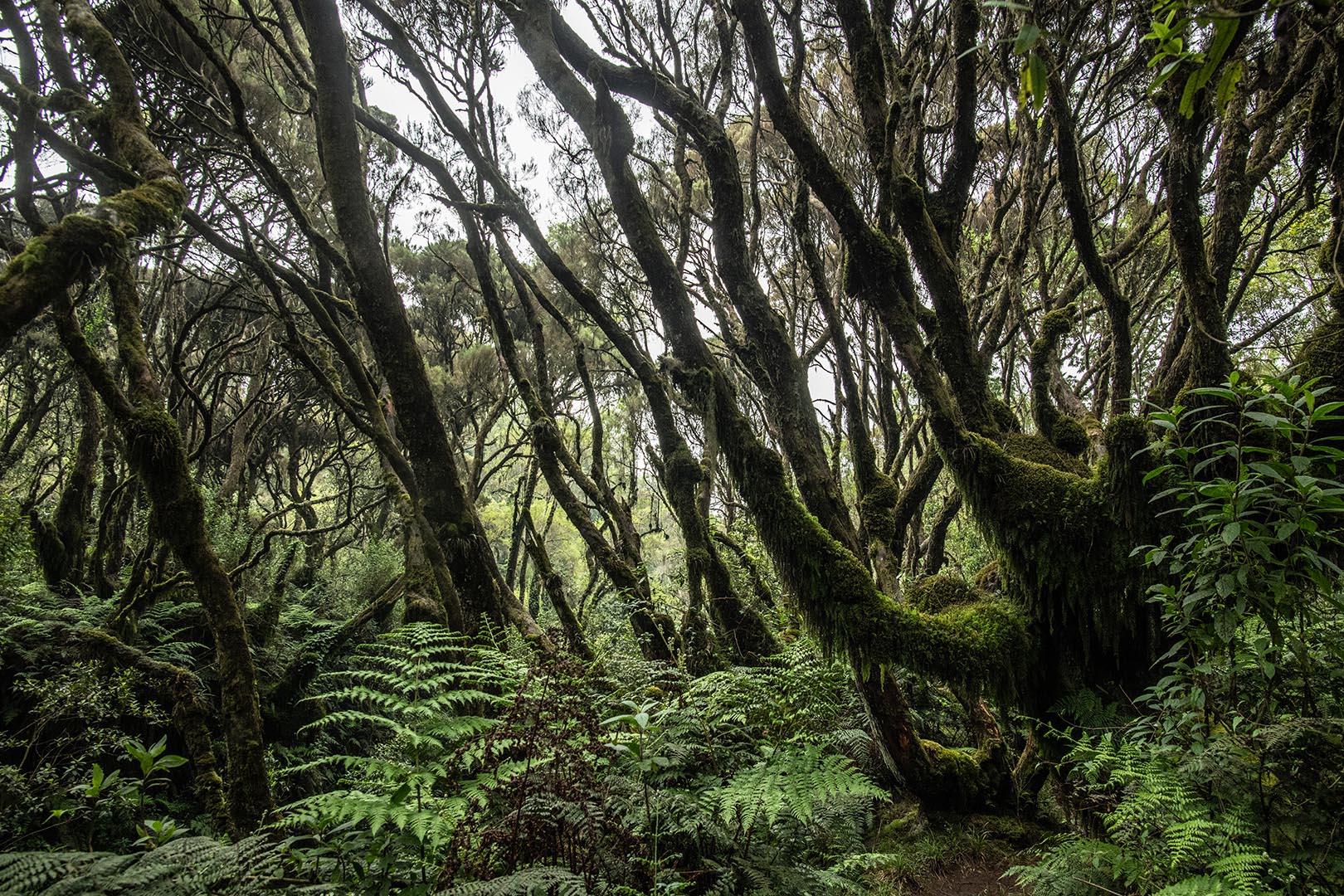
The ancient Hagenia forest from the Karisoke area.
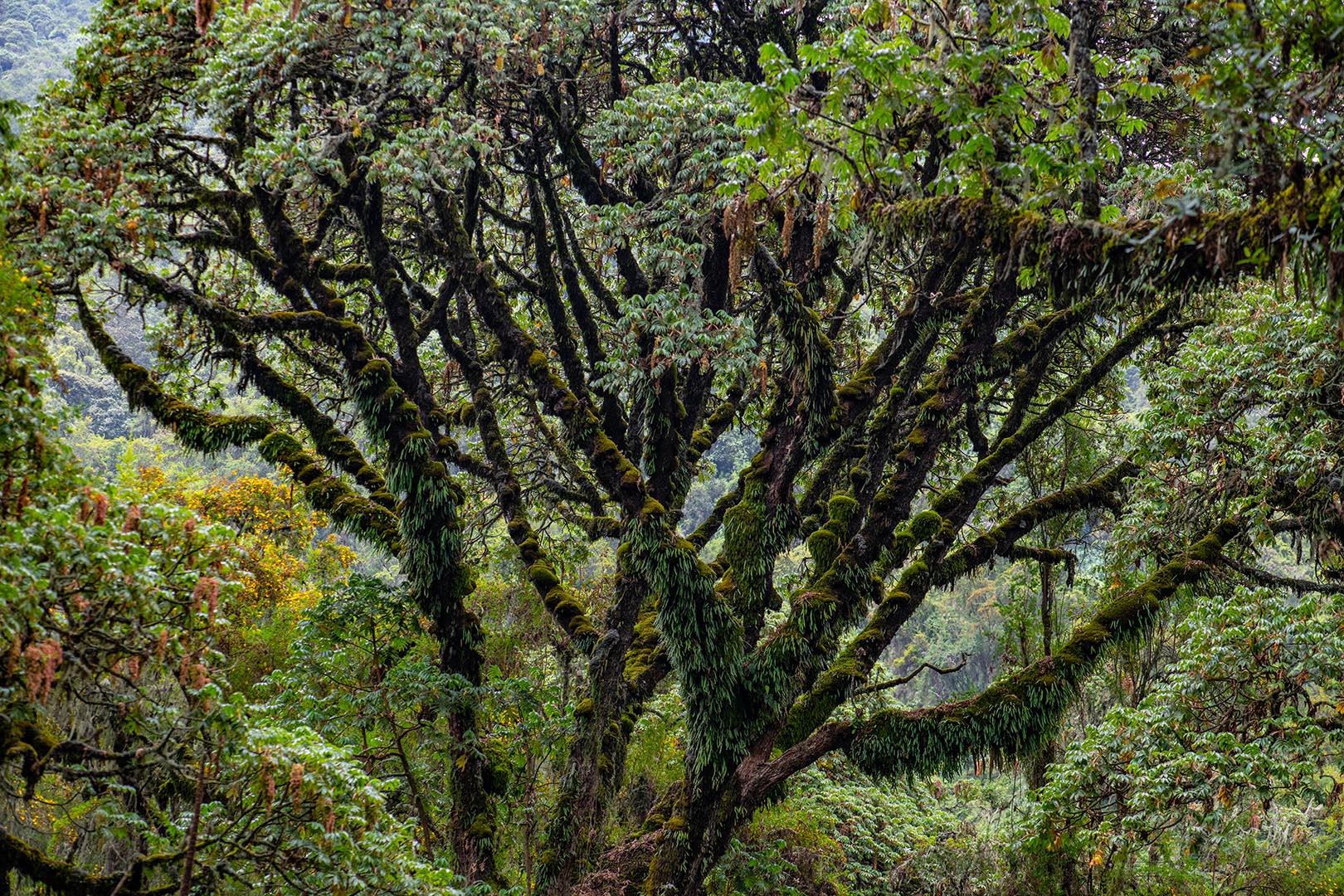
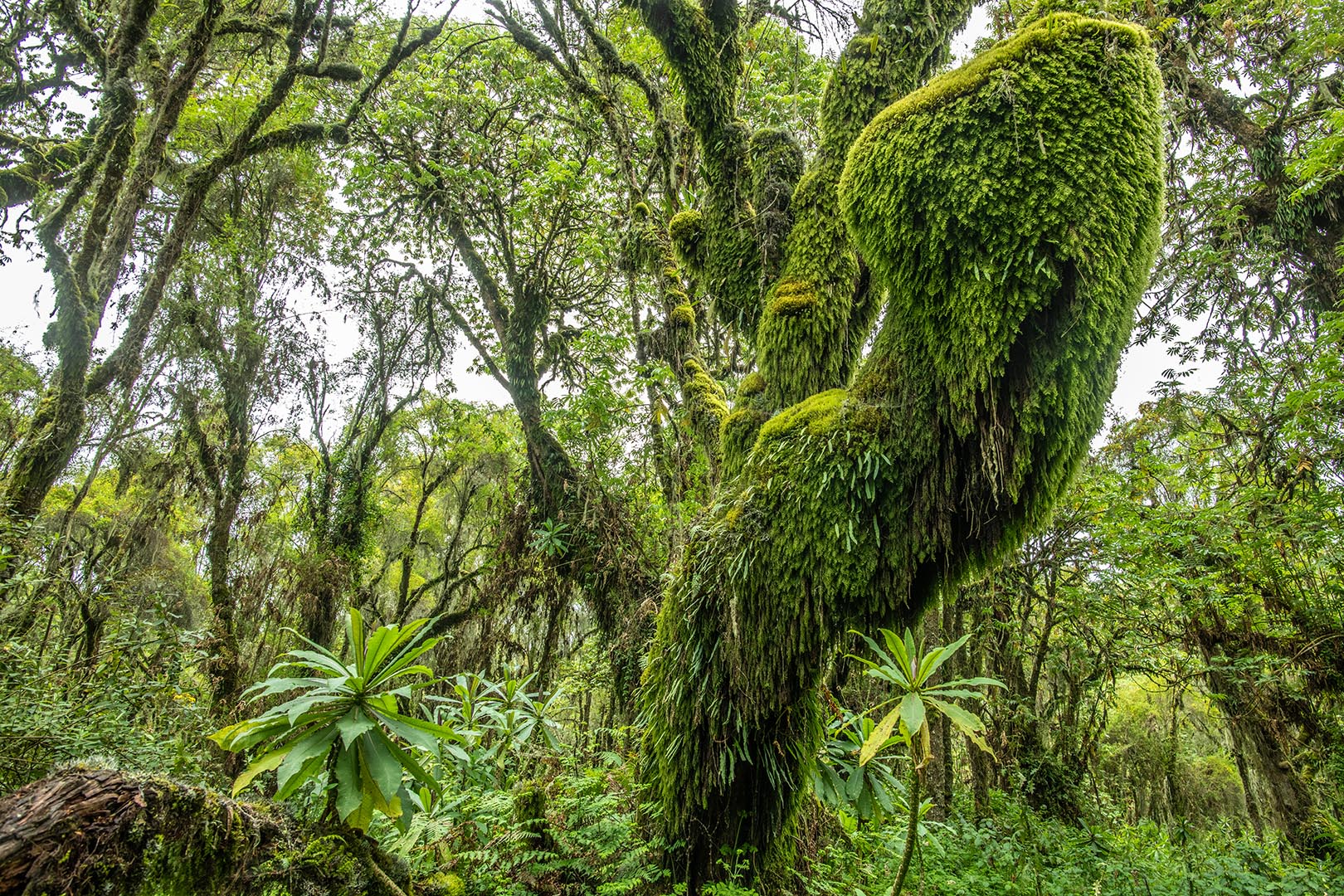
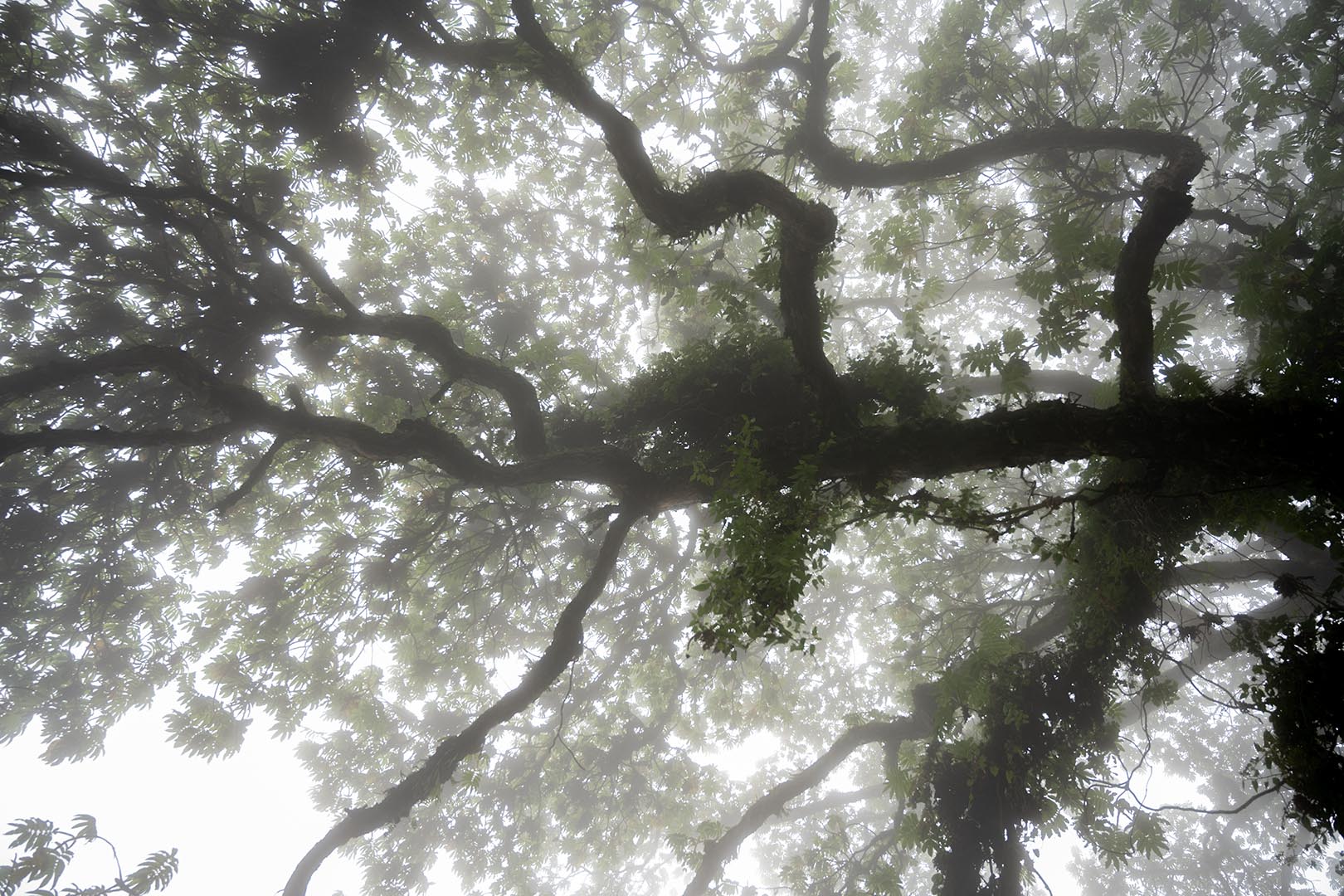
Around Karisoke, Hagenia trees have grown massive and are thought to be
between 200 and 500 years old. Most of them are heavily
covered with mosses.
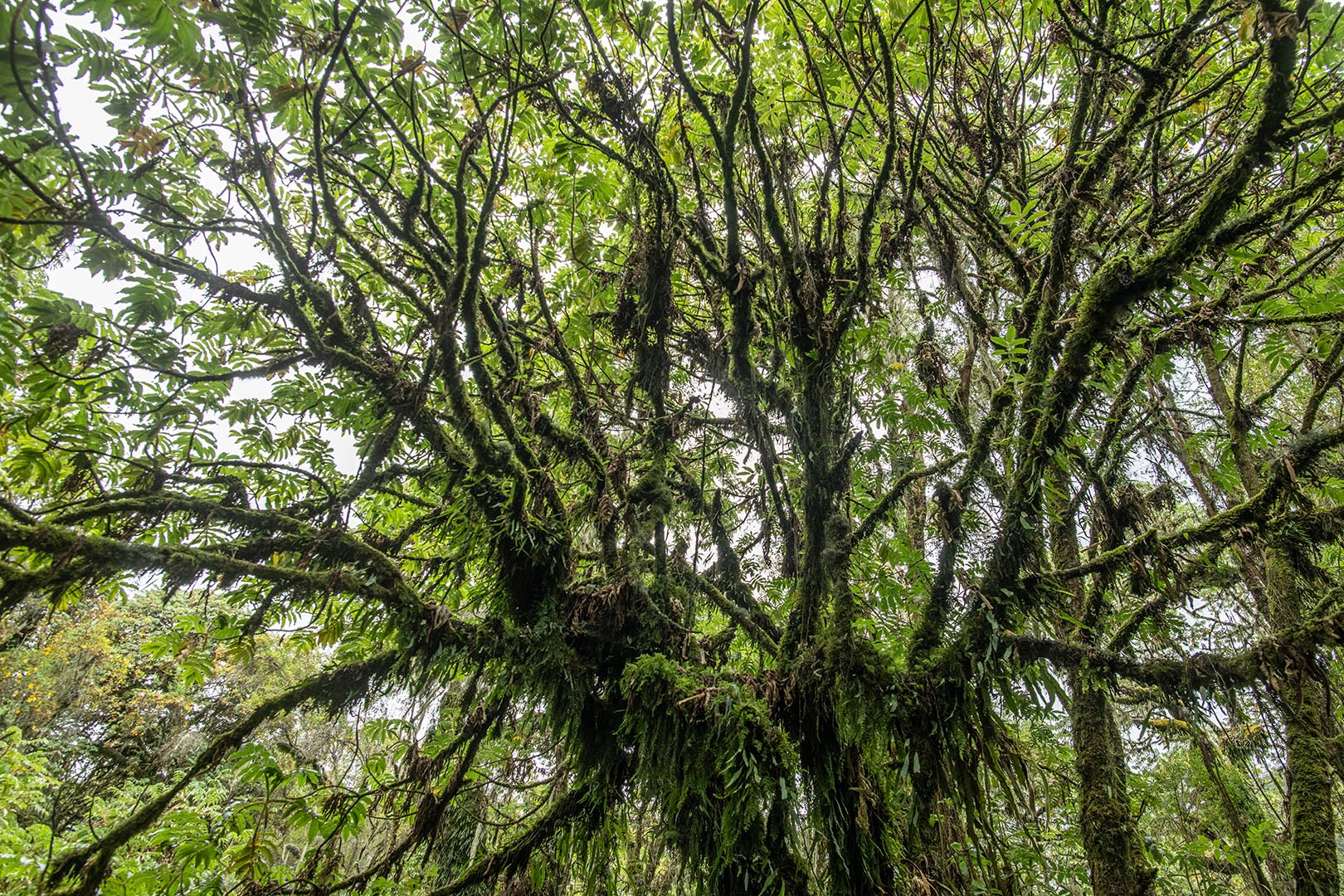
The crown of a young Hagenia.
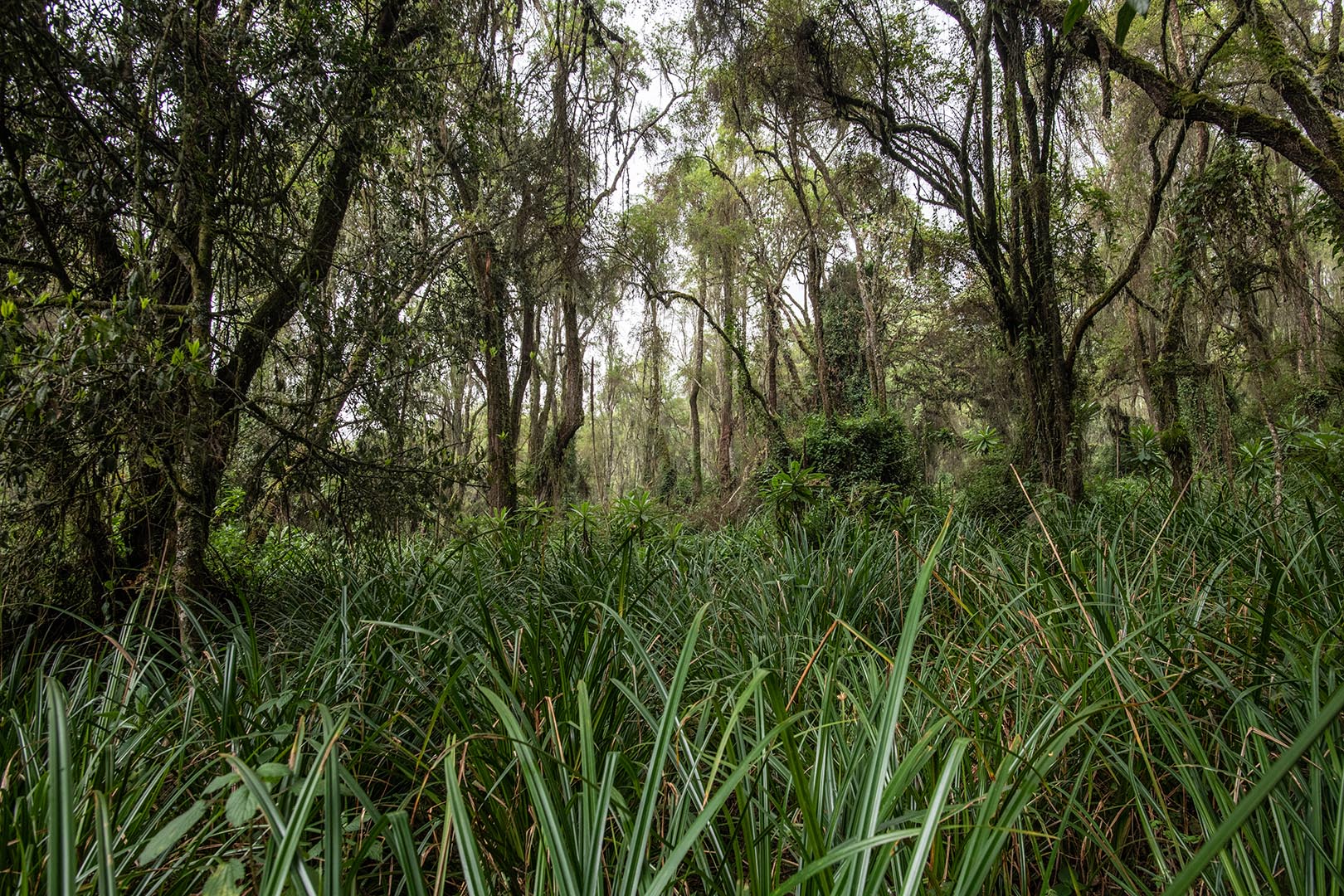
Small hyperhumid clearings in the Karisoke.
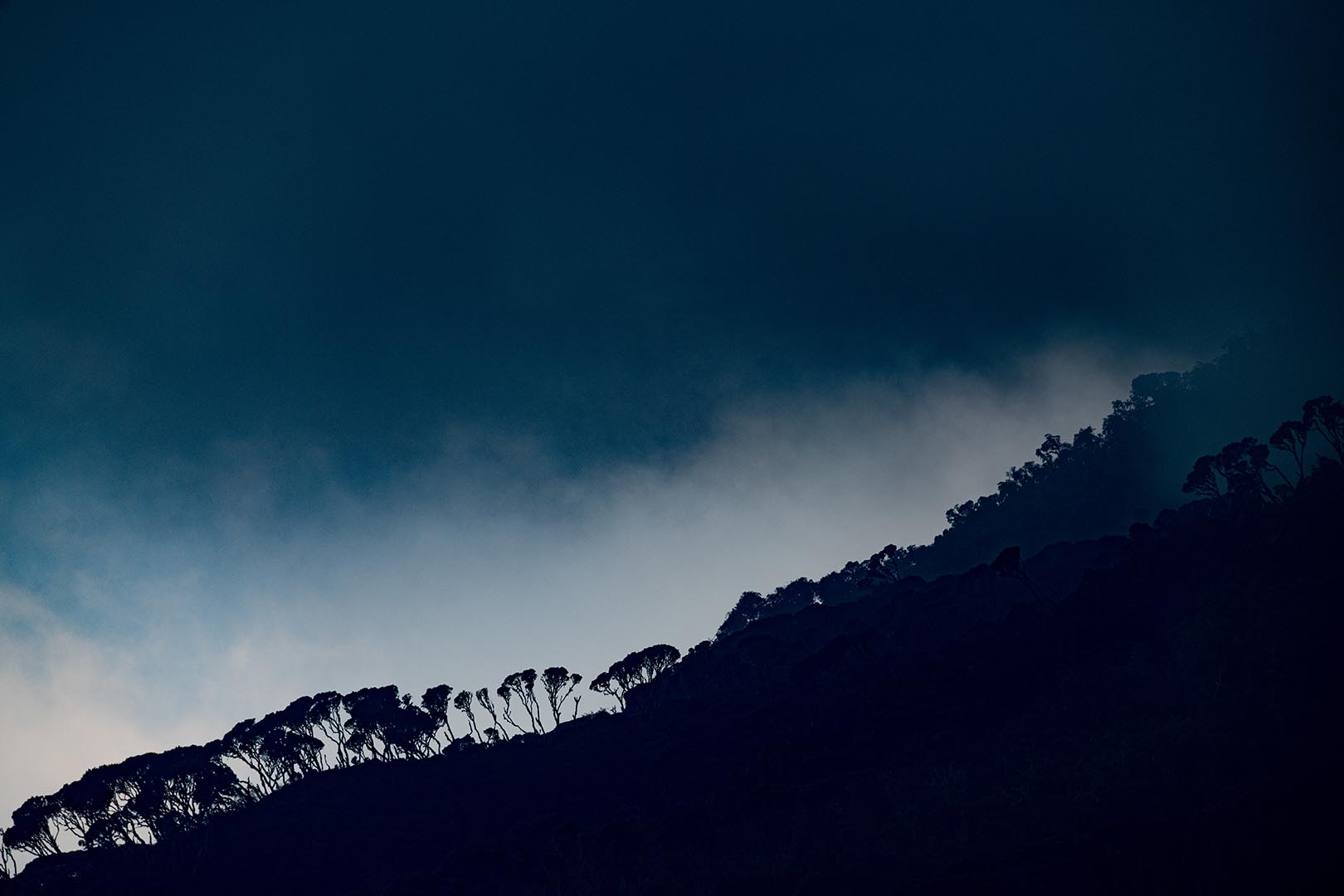
Giant heath on the ridges of Sabyinyo Volcano.
Inside giant Heath forest on the ridges.
Hypericum forests start right after passing the altitudinal ranges of Hagenia forests.
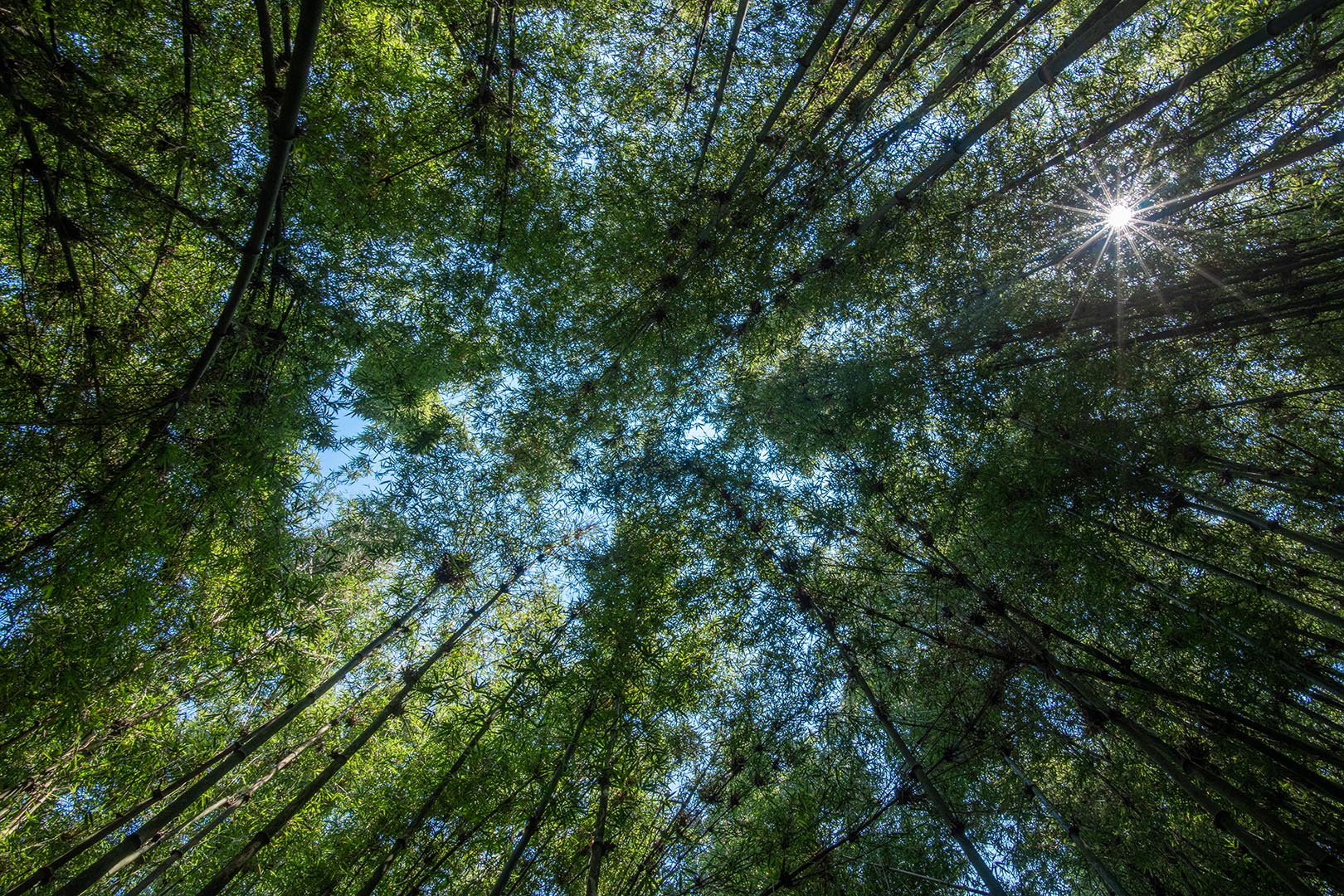
There are different Bamboo formations in the volcanoes.
They vary in heights and architecture,
the tallest I have seen are on then south of Karisimbi.
A Golden Monkey Cercopithecus kandti on the wall making the park limits.
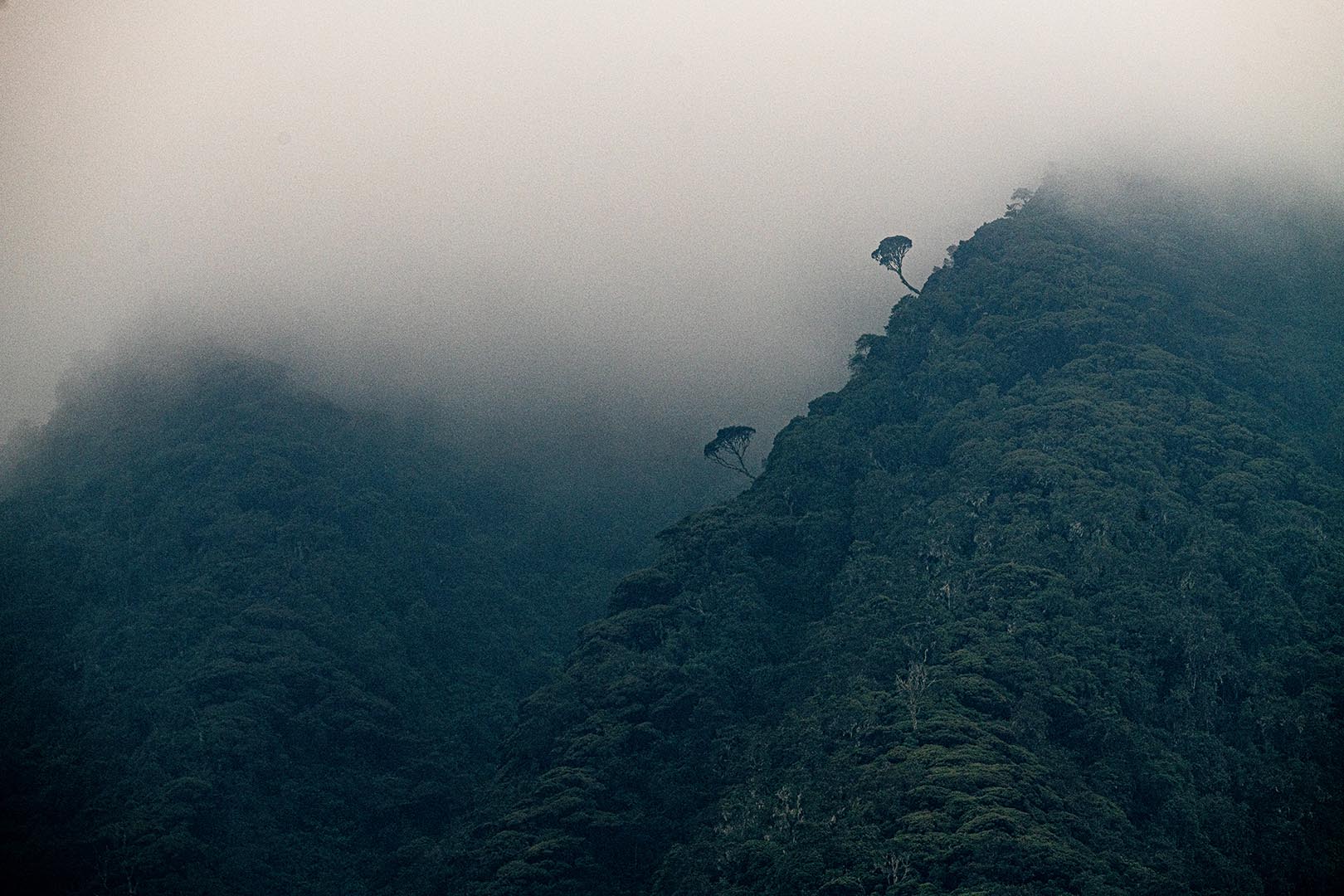
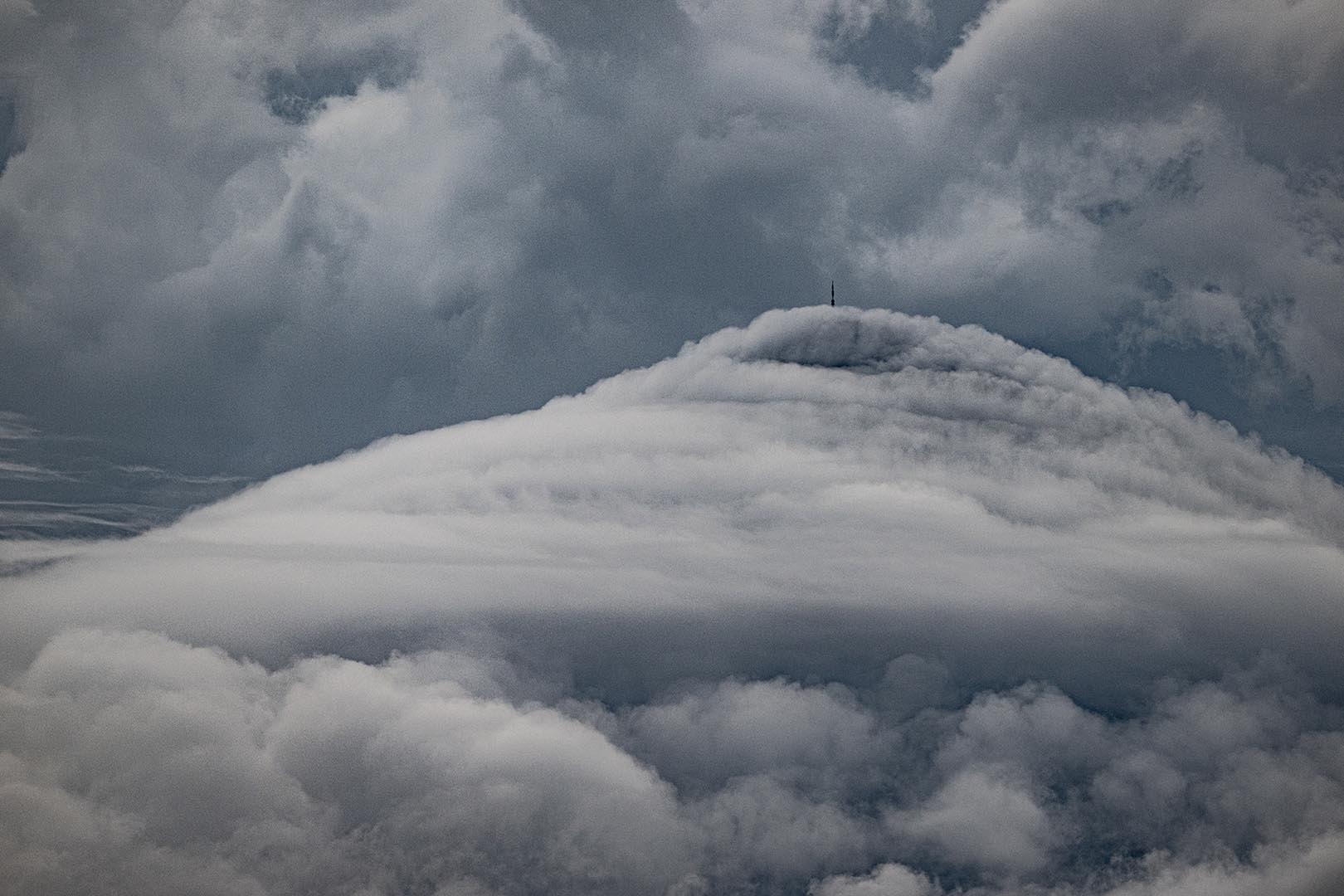
The misty end of days on Sabyinyo.
The mist in the volcanoes is like the main living being,
coming down on the hills and valley almost daily.
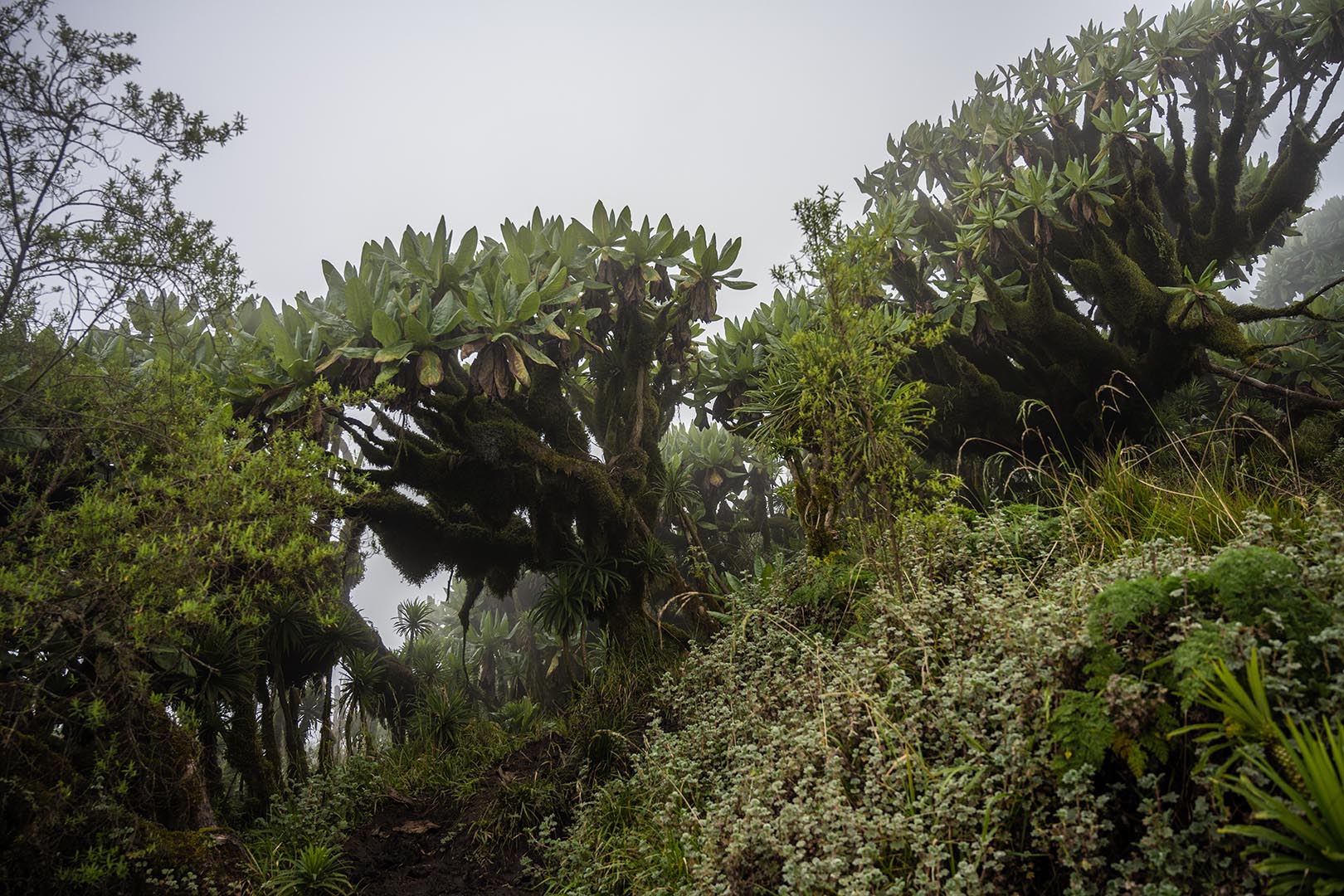
The highest altitudes, above roughly 3,500 are home of
the giant Senecio and make up the true afroalpine forest belt.
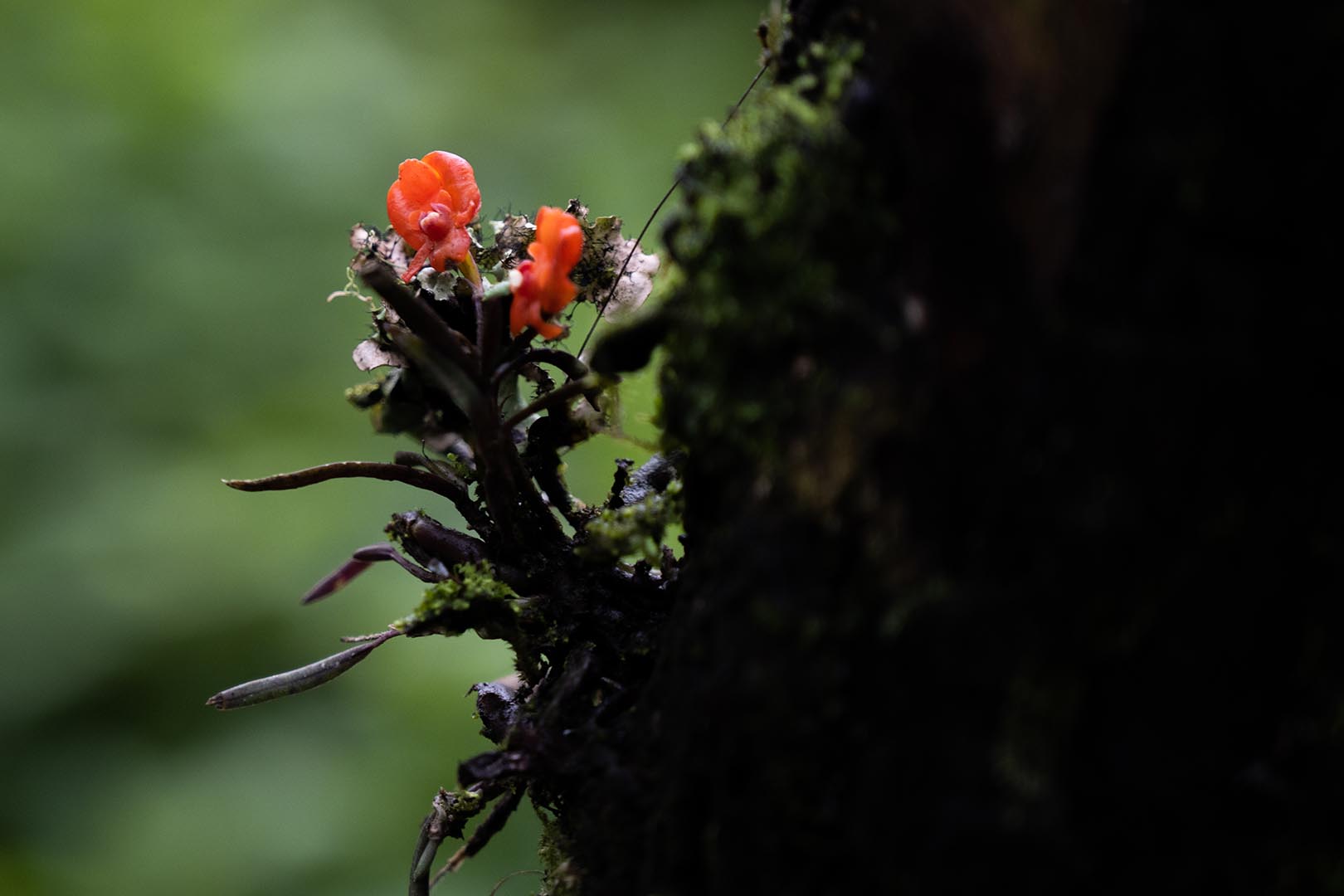
The orchid, Polystachya delepierrei, usually more orange,
is an endemic species to Rwanda.
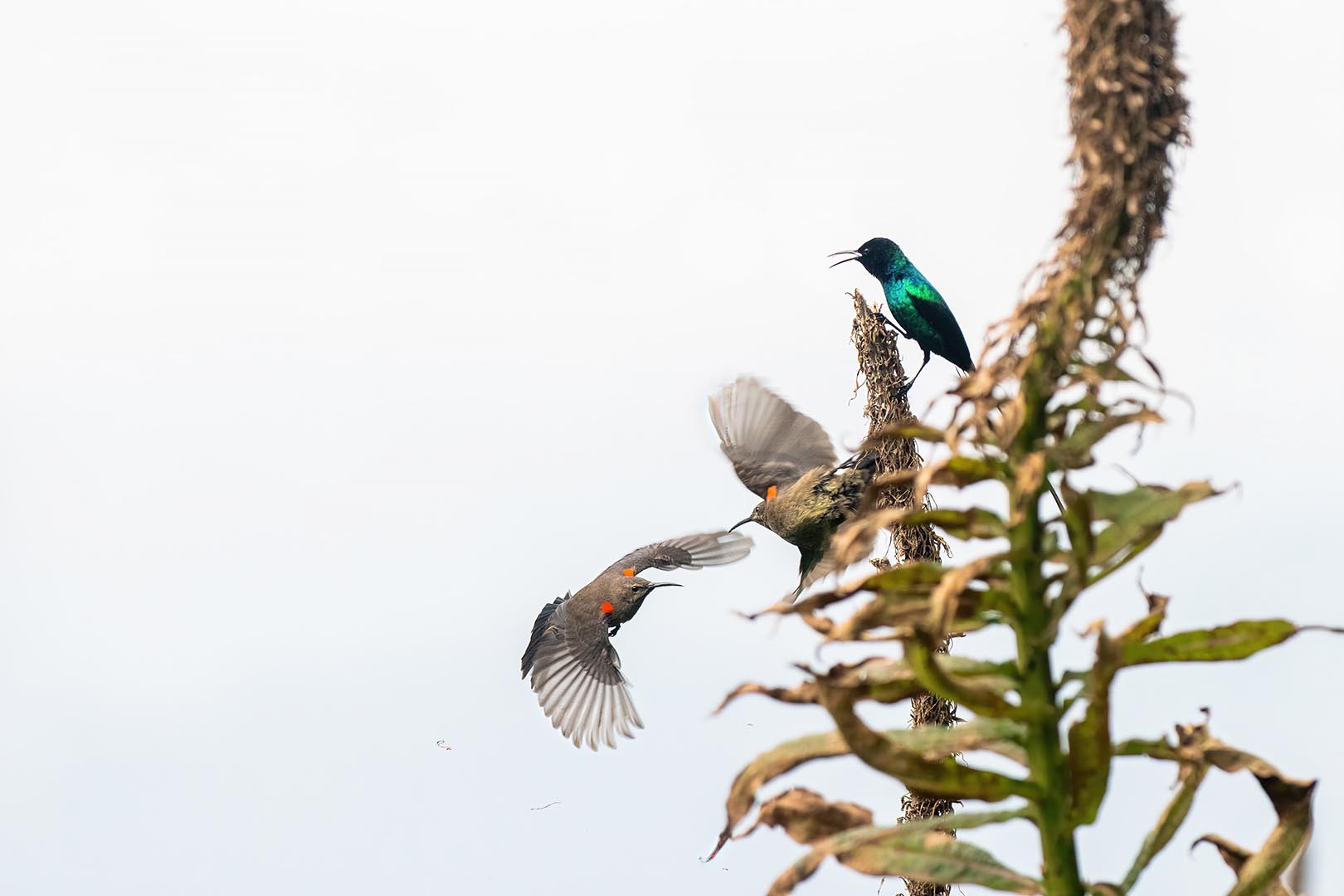
Scarlet-tufted Sunbirds Nectarinia johnstoni,
quite common on Lobelia at the highest altitudes
of the Volcanoes.
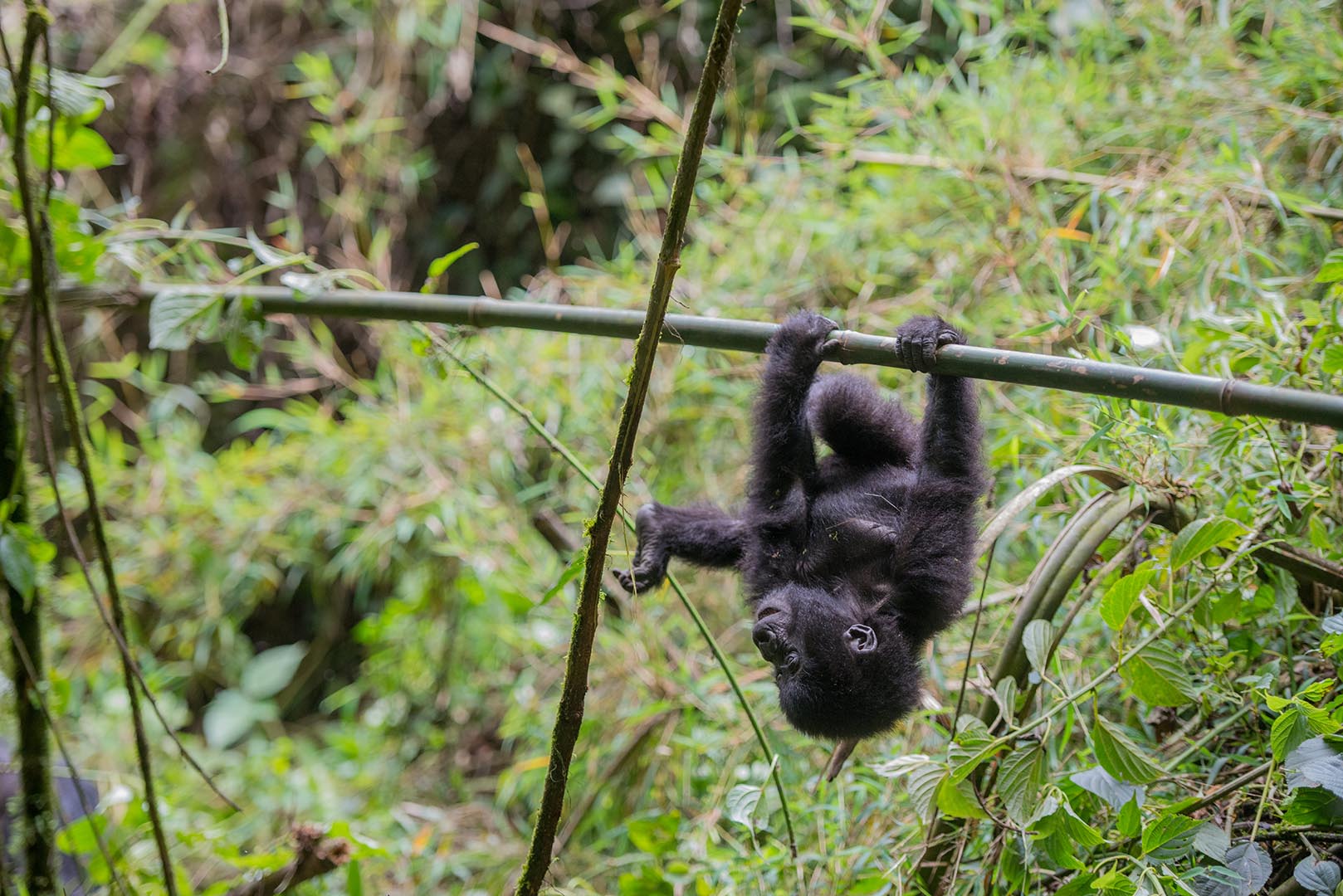
A baby gorilla being a baby gorilla.
Gihishamotsi, silverback of the Sabyinyo family, peacefully eating
with a nasty scar on his lower lip, from a previous fight